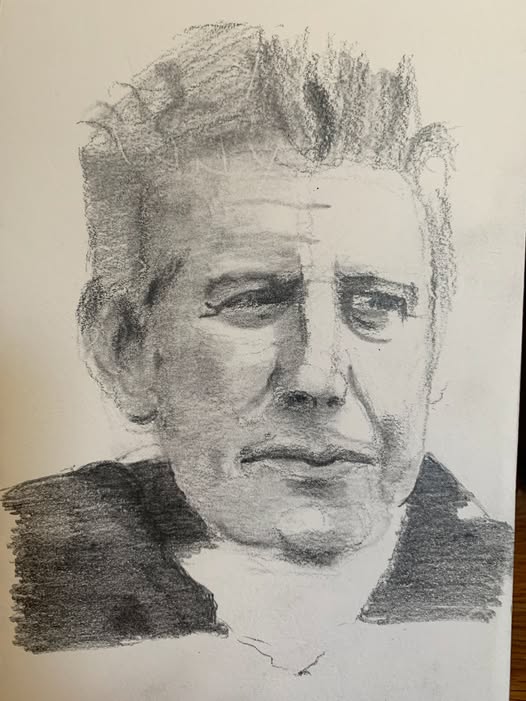
Anthony Bourdain, the celebrated chef, bestselling author and host of CNN’s Parts Unknown, died by suicide on June 8, 2018, at the age of 61.
Bourdain was found dead in his hotel room in France while filming an upcoming episode of Parts Unknown. CNN confirmed his death that morning, describing him as an extraordinary storyteller whose love of food, travel and people helped audiences see the world differently.
His death shocked viewers around the world and brought renewed attention to the life of a man who had transformed himself from a New York chef into one of television’s most distinctive cultural storytellers.
Anthony Bourdain Died in France at 61
Bourdain died on Friday, June 8, 2018, while working in France.
He was filming an episode of Anthony Bourdain: Parts Unknown when he was found unresponsive in his hotel room.
CNN confirmed that his death was suicide. He was 61 years old.
His close friend and fellow chef Eric Ripert was among the people working with him in France at the time.
The production crew had been preparing to continue filming when Bourdain’s death was discovered.
Anthony Bourdain’s Cause of Death
Bourdain’s death was officially reported as suicide.
Contemporary CNN coverage confirmed that he died by suicide while staying in France for production of his television program.
Because the circumstances of a suicide can involve deeply personal and complex factors, it is important not to reduce his death to a single assumed explanation.
Public discussions after Bourdain’s death frequently revisited his previous comments about addiction and emotional struggles, but those aspects of his history do not establish one definitive reason for his death.
He Was Filming Parts Unknown When He Died
At the time of his death, Bourdain remained actively involved in producing Parts Unknown.
CNN later confirmed that filming for the program’s 12th season had already been underway.
The final season included a completed Kenya episode featuring W. Kamau Bell, along with material filmed in Indonesia, West Texas, Spain and New York City’s Lower East Side.
Only the Kenya episode included Bourdain’s completed narration.
The remaining episodes were assembled differently because production had been interrupted by his death.
From Professional Kitchen to Bestselling Author
Long before he became an international television personality, Bourdain built his career inside professional kitchens.
He worked his way through restaurants before eventually becoming executive chef at Brasserie Les Halles in Manhattan.
His life changed dramatically after he wrote about the hidden culture of restaurant kitchens.
That writing evolved into Kitchen Confidential: Adventures in the Culinary Underbelly, the bestselling book that introduced millions of readers to his sharp, candid and often irreverent voice.
The book transformed Bourdain from a working chef into a public figure.
Kitchen Confidential Made Anthony Bourdain Famous
Kitchen Confidential stood apart from traditional celebrity-chef writing.
Rather than presenting restaurant kitchens as polished and glamorous, Bourdain described the exhaustion, pressure, personalities and chaos behind professional food service.
His writing combined humor, confession and observations from years inside kitchens.
Readers responded strongly to his blunt style.
The success of the book ultimately opened the door to television, where Bourdain discovered an even larger platform.
Television Allowed Bourdain to Explore the World
Bourdain’s television career initially focused heavily on food and travel, but his programs gradually became something broader.
He used meals as an entry point into conversations about politics, history, class, migration, war, identity and ordinary life.
His approach was especially visible on Parts Unknown.
Instead of simply showcasing famous restaurants or tourist attractions, Bourdain often ate with families, street vendors, fishermen, workers and local residents.
The Peabody Awards described the show as far more than a conventional culinary travel program, praising Bourdain’s ability to get people to open up about their communities and cultures.
Parts Unknown Became His Defining Television Work
Anthony Bourdain: Parts Unknown premiered on CNN in 2013.
The program became one of the network’s most distinctive original series.
Bourdain travelled extensively, exploring places through food while allowing conversations to move into history, social conditions and the lives of ordinary people.
The show received a Peabody Award in its first year.
The Peabody organization praised Bourdain for expanding viewers’ understanding of the world while maintaining an irreverent, curious and non-condescending approach to the people he met.
His Approach Was About People as Much as Food
Bourdain often explained that food was merely the beginning of his conversations.
His programs asked simple questions: what people ate, what made them happy and what they valued.
From those conversations, broader stories emerged about culture and human experience.
That approach distinguished him from many conventional food presenters.
He was interested in meals because they brought people together.
A table could lead to conversations about family, colonial history, poverty, conflict, migration or belonging.
He Was Known for Curiosity Rather Than Formal Journalism
Bourdain did not present himself as a traditional foreign correspondent.
Yet his programs often achieved something close to documentary journalism.
His willingness to sit with people, listen and eat whatever was offered allowed him to enter environments where a conventional television interview might have felt unnatural.
The Peabody Awards specifically praised his comfort with people from very different backgrounds and his ability to reveal aspects of places that traditional reporting could miss.
That ability became one of the strongest elements of his legacy.
Bourdain Had Spoken Openly About Past Drug Addiction
Bourdain never concealed the darker periods of his earlier life.
He spoke publicly about past heroin addiction and cocaine use during his years working in restaurant kitchens.
CNN’s coverage following his death recalled that Bourdain had discussed those experiences openly and had described himself as fortunate to have survived that period of his life.
He later used his television platform to discuss addiction and the opioid crisis, including in communities personally connected to his earlier experiences.
His openness about addiction became one reason many viewers found him unusually candid.
His Past Should Not Be Simplified Into an Explanation for His Death
Although Bourdain spoke openly about addiction and difficult periods of his life, those experiences should not be used to construct an unsupported explanation for his suicide.
A person’s death by suicide rarely has one simple or publicly knowable cause.
Bourdain’s public persona was complex: adventurous, successful and intensely curious, while his private emotional life was known only to those closest to him.
His death illustrates why outward success does not necessarily reveal what someone may be experiencing internally.
Bourdain Had a Daughter
At the time of his death, Bourdain was the father of a young daughter, Ariane.
CNN’s announcement specifically expressed sympathy for his daughter and family.
Bourdain generally tried to keep his daughter away from the most public aspects of his fame.
The loss therefore affected not only an international audience but first and foremost his family.
Eric Ripert Was With Him in France
Chef Eric Ripert, one of Bourdain’s closest friends, was working with him in France when he died.
Bourdain had travelled there to film an episode of Parts Unknown.
Ripert and Bourdain had appeared together many times over the years and shared both professional and personal friendship.
The fact that Bourdain died while working on another episode emphasized how active his career remained at the time.
His Death Shocked the Culinary World
Tributes came quickly from chefs, writers, television personalities and fans around the world.
For many viewers, Bourdain felt unusually familiar despite never meeting them personally.
His television style involved speaking directly to the audience in a way that made viewers feel as though they were travelling alongside him.
CNN colleagues repeatedly described the reaction to his death as deeply personal because of the relationship audiences had developed with him through years of television.
Parts Unknown Continued After His Death
CNN decided to broadcast the remaining material from the unfinished final season.
Seven final installments were scheduled beginning in September 2018.
The episodes included Kenya, Indonesia, West Texas, Spain and New York’s Lower East Side, along with retrospective specials.
The final broadcasts became both television programs and a farewell to Bourdain’s career.
His Legacy Extended Far Beyond Cooking
Bourdain’s influence cannot be measured only through restaurants or cookbooks.
He helped change the way television presented travel and food.
Instead of treating foreign places primarily as exotic destinations, he frequently tried to show viewers how people actually lived.
He approached food as a cultural language.
Meals could reveal history, inequality, resilience, migration and identity.
That philosophy influenced a generation of travel presenters, food writers and documentary filmmakers.
He Helped Audiences Become More Curious About Other Cultures
One of Bourdain’s strongest qualities was his willingness to admit when he did not fully understand a place.
Rather than positioning himself as an authority everywhere he travelled, he often allowed local people to guide conversations.
That curiosity became essential to his appeal.
Viewers saw someone who could enter unfamiliar surroundings without pretending that difference needed to be simplified.
In doing so, he encouraged audiences to approach other cultures with interest rather than judgment.
A Peabody-Winning Storyteller
The Peabody Award given to Parts Unknown recognized precisely that contribution.
The award organization praised the program for expanding both the cultural and culinary horizons of its audience.
The series also received numerous Emmy Awards during its run.
Those honors confirmed that Bourdain’s influence had extended beyond the food-television genre.
He had become one of television’s most distinctive storytellers.
Remembering Anthony Bourdain Beyond His Death
Bourdain’s death remains an important part of his story, but it should not overshadow everything that preceded it.
He was a chef who unexpectedly became a writer.
He became a bestselling author who unexpectedly moved into television.
And he ultimately became a global cultural figure by sitting at tables and listening to people.
His career demonstrated that food television could tell serious stories without losing humor, humanity or appetite.
What Has Been Confirmed
The following information has been firmly established:
- Anthony Bourdain died on June 8, 2018.
- He was 61 years old.
- He died by suicide.
- He was in France filming Parts Unknown at the time.
- Bourdain was a chef, bestselling author and television host.
- Kitchen Confidential helped make him internationally famous.
- Anthony Bourdain: Parts Unknown premiered on CNN in 2013.
- The series received a Peabody Award.
- Production on Season 12 was underway when he died.
- His final episodes were broadcast later in 2018.
- He had publicly discussed previous struggles with heroin addiction and cocaine use.
- He was survived by his daughter and other family members.
What Should Not Be Assumed
Although Bourdain’s manner of death is confirmed, several things should not be reduced to speculation:
- There is no responsible basis for attributing his suicide to one single event.
- Past addiction does not by itself explain his death.
- Public success or professional activity cannot reveal a person’s private emotional state.
- Personal relationships should not be presented as a confirmed cause unless directly established by reliable evidence.
Suicide is complex, and simplistic explanations can misrepresent both the person and the circumstances surrounding a death.
Anthony Bourdain’s Influence Continues
Years after his death, Bourdain’s books and television programs continue to attract new audiences.
Kitchen Confidential remains one of the best-known books about professional restaurant culture.
Parts Unknown remains influential because it demonstrated that travel programming could be curious, political, funny, uncomfortable and deeply human at the same time.
Bourdain entered homes around the world ostensibly to talk about food.
What he ultimately offered was something broader: an invitation to sit with people, listen carefully and remain curious about lives different from one’s own.
That remains one of the most enduring parts of his legacy.
A Lasting Legacy of Food, Travel and Human Connection
Anthony Bourdain spent years crossing borders in search of meals and stories.
But the lasting appeal of his work was never simply the food.
It was his ability to recognize that what people ate could reveal how they lived, what they valued and what histories they carried with them.
His death at 61 was a devastating loss to his family, colleagues and worldwide audience.
Yet his work continues to encourage curiosity about unfamiliar places and respect for the people living there.
For many viewers, Anthony Bourdain remains not simply a chef or television host, but a travelling companion who helped make the world feel simultaneously larger, stranger and more connected.
Disclaimer
This article is based on contemporaneous reporting from CNN, official CNN information concerning the final season of Parts Unknown, and records from the Peabody Awards. CNN confirmed that Anthony Bourdain died by suicide in France on June 8, 2018, at age 61. This article does not attempt to attribute his suicide to any single relationship, event, diagnosis or past experience without reliable evidence.
If you or someone you know may be in immediate danger or considering suicide, contact local emergency services or a suicide/crisis support service available in your country.