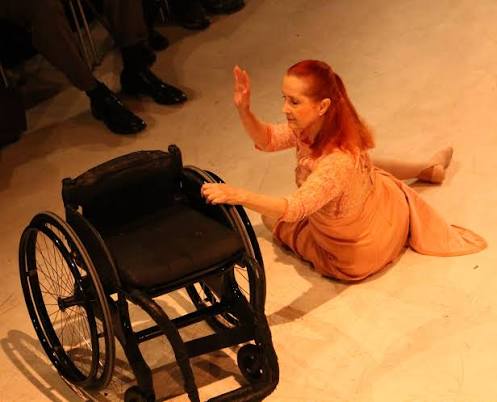
The dance and disability communities are mourning the death of Kitty Lunn, the pioneering ballet dancer, actress and disability advocate who dedicated much of her life to expanding opportunities for performers with disabilities.
Lunn died at the age of 76, leaving behind a legacy that extended well beyond traditional ballet. She was the founder of Infinity Dance Theater, an inclusive dance company that brought together performers with and without disabilities while adapting classical ballet for wheelchair users and other dancers with different physical abilities.
Her career was marked by both professional achievement and a determination to continue dancing after a devastating spinal injury changed her life.
Kitty Lunn’s Death and Legacy
News of Lunn’s death emerged on September 25, 2026, as tributes began highlighting her contribution to dance and disability representation.
She had spent decades challenging assumptions about who could participate in professional dance. Through her performances, teaching and advocacy, Lunn demonstrated that ballet could be adapted without abandoning the discipline and artistry associated with the form.
Her work ultimately helped create greater visibility for dancers with disabilities in theatre and dance.
A Spinal Injury Changed Her Career
Lunn’s own experience with disability became central to the work she would later champion.
She was already pursuing a career in ballet when, in 1987, she slipped on ice and fell down a flight of stairs while rehearsing for what was expected to be her Broadway debut.
The accident fractured her spine and caused a spinal-cord injury that left her paraplegic.
Lunn underwent five spinal surgeries and spent almost three years recovering. Rather than abandoning dance, she eventually returned to ballet classes, this time performing from a wheelchair.
That experience became the foundation for a new chapter in her career.
Kitty Lunn at a Glance
| Detail | Information |
|---|---|
| Full name | Kitty Lunn |
| Age at death | 76 |
| Profession | Ballet dancer, actress, teacher and disability advocate |
| Known for | Inclusive dance and disability advocacy |
| Founded | Infinity Dance Theater |
| Major career change | Spinal-cord injury in 1987 |
| Injury outcome | Paraplegia |
| Dance company founded | 1995 |
| Acting credit | As the World Turns |
| Notable performances | Kennedy Center and 1996 Cultural Paralympiad |
| Date of death | September 24, 2026 |
Founding Infinity Dance Theater
In 1995, Lunn founded Infinity Dance Theater, a mixed-ability company featuring dancers with and without disabilities.
The company combined classical ballet with jazz and contemporary dance techniques adapted to the individual abilities of its performers.
Its work eventually reached audiences throughout the United States and internationally. Infinity Dance Theater performed at the Kennedy Center and participated in the 1996 Cultural Paralympiad in Atlanta.
For Lunn, the wheelchair was not simply something that allowed her to continue dancing. She viewed it as a tool that could become part of the dancer’s movement vocabulary.
Her approach helped demonstrate that choreography could be reimagined for seated performers rather than simply excluding them from conventional dance spaces.
Kitty Lunn’s Acting Career
Lunn was also an accomplished actress.
Among her television credits was a recurring role as Sally Horton, a disabled character on the long-running daytime drama As the World Turns.
She also appeared in theatre productions including The Chaikin Project, Agnes of God and The Waiting.
Her work in acting reinforced the advocacy that became increasingly important throughout her career, particularly the push for greater opportunities for performers with disabilities.
An Advocate for Inclusion
Lunn’s influence extended into the wider entertainment industry.
She served on performers-with-disabilities committees for both the Actors’ Equity Association and SAG-AFTRA, where she advocated for greater compliance with disability protections and broader opportunities for disabled performers.
She received the 2004 Rosetta LeNoire Award from Actors’ Equity for her contribution to diversity and nontraditional casting.
Her advocacy was closely connected to her own experience. Rather than treating disability as a reason to step away from professional dance, she used her career to challenge the limitations placed on performers with disabilities.
Teaching a Different Approach to Ballet
Teaching became another important part of Lunn’s legacy.
She worked with dancers with disabilities and encouraged students to develop technique within their individual physical abilities.
Her approach differed from dance therapy because she sought to provide rigorous ballet training to people whose bodies moved differently from those of conventional dancers.
She also worked with dance teachers, helping them develop ways of including dancers with disabilities in mainstream classes.
Remembering Kitty Lunn
Kitty Lunn’s career cannot easily be separated from the transformation that followed her spinal injury.
She went from preparing for a Broadway debut to learning how to approach ballet from a wheelchair, eventually creating a company specifically designed to make professional dance more accessible.
Infinity Dance Theater became one of the most visible expressions of that philosophy.
Her work also reached beyond the stage through teaching, acting and advocacy for performers with disabilities.
For dancers and disability advocates who followed her work, Lunn leaves behind a legacy built around persistence, creativity and inclusion.
At 76, she is being remembered not simply as a ballet dancer who experienced a life-changing injury, but as an artist who used that experience to reshape how disability could be represented in dance and performance.
Disclaimer: This article is based on current reporting concerning Kitty Lunn’s death and published biographical information about her career. Details about her personal life and the circumstances surrounding her death were limited in the sources reviewed and have not been supplemented with speculation.