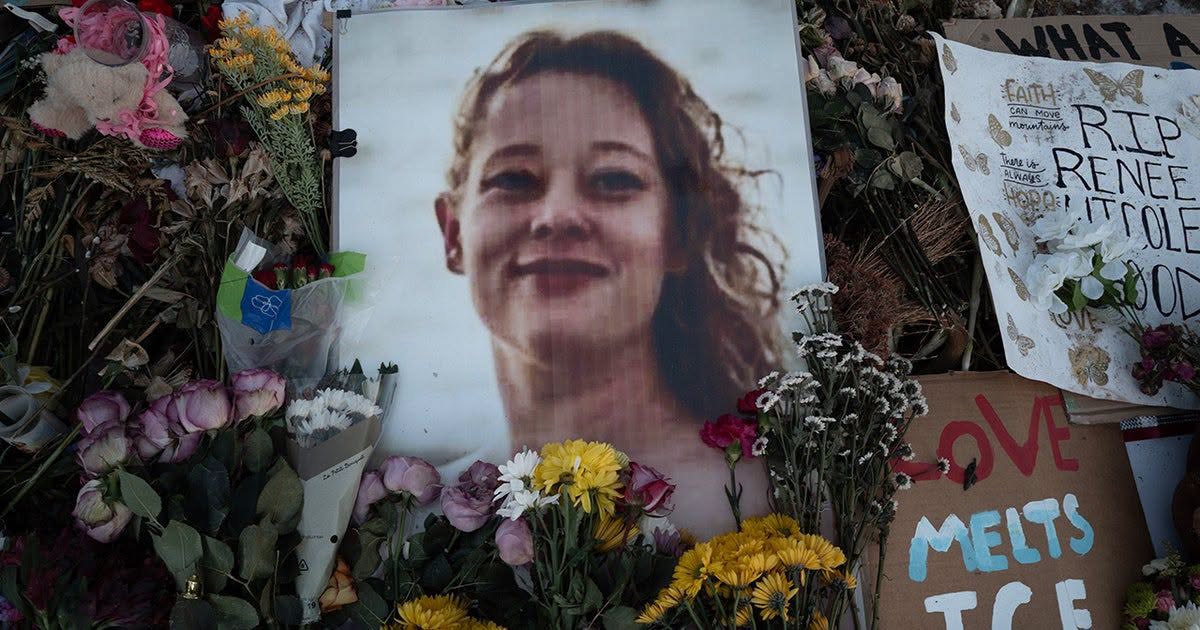
The family of Renee Nicole Good, the 37-year-old Minneapolis mother of three who was fatally shot by an Immigration and Customs Enforcement agent in January, has filed two federal civil lawsuits over her death.
The lawsuits were filed on October 1, 2026, in the U.S. District Court for the District of Minnesota. One names the United States as the defendant under the Federal Tort Claims Act, while the second names ICE officer Jonathan Ross and several current and former federal officials.
The family alleges wrongful death, excessive force, negligence and civil-rights violations connected to the January 7 shooting. Federal officials have defended Ross’s actions as self-defense, while the family disputes that account.
Renee Good’s Family Files Federal Lawsuits
Renee Good’s brother, Brent Ganger, acting as trustee for her next of kin, and her partner, Becca Good, are plaintiffs in the two lawsuits filed Thursday.
The first case names the United States as the sole defendant and seeks damages under the Federal Tort Claims Act.
According to the family’s attorneys, that complaint includes claims for wrongful death, battery, assault, false imprisonment, intentional infliction of emotional distress and negligence.
The second lawsuit targets individual federal officials and agents and alleges constitutional and civil-rights violations arising from the broader immigration enforcement operation in Minneapolis.
Who Is Named in the Lawsuits?
The individual-defendant lawsuit names ICE officer Jonathan Ross, who fired the fatal shots, along with several federal officials.
Among those named are Stephen Miller, former Homeland Security Secretary Kristi Noem, Tom Homan, Greg Bovino, Corey Lewandowski, Todd Lyons and unidentified federal agents.
The lawsuit alleges that the defendants played different roles in Operation Metro Surge and in the events that culminated in Good’s death.
Those claims are allegations contained in a civil complaint and have not yet been adjudicated by a court.
Renee Good Was Shot on January 7
Good was killed on January 7, 2026, during a federal immigration enforcement operation in south Minneapolis.
She was inside a Honda Pilot when Ross opened fire, striking her three times. Good was later pronounced dead after being taken to Hennepin County Medical Center, according to the federal complaint.
Good and her partner were not targets of an immigration investigation, according to the family’s attorneys.
The complaint states that they were in the neighborhood while federal agents were carrying out Operation Metro Surge, a large immigration-enforcement campaign.
Family Alleges Excessive and Unjustified Force
The lawsuits allege that Ross and other federal officers unlawfully detained Good and used excessive deadly force.
According to the plaintiffs, Ross violated federal use-of-force rules by firing into Good’s moving vehicle even though, they argue, he was able to move out of its path.
The family further alleges that federal officers failed to provide timely medical assistance and prevented others from immediately helping her.
Those assertions form part of the family’s legal case and remain allegations unless established through the court process.
Federal Officials Have Defended the Shooting
Federal authorities have offered a different account of what happened.
Officials have said Ross acted in self-defense because he believed Good was attempting to strike or ram him with her vehicle.
Video from the incident has been widely reviewed and has become central to the disagreement over whether the officer faced an immediate threat when he fired.
The family argues that the footage and other evidence contradict the self-defense justification.
The civil litigation will give both sides an opportunity to present evidence and arguments regarding the shooting.
Second Lawsuit Alleges Broader Civil-Rights Conspiracy
The second complaint goes beyond the immediate shooting.
It alleges that federal officials participated in a conspiracy connected to Operation Metro Surge that unlawfully targeted Somali and Hispanic communities and people who supported them.
The lawsuit invokes federal civil-rights law and alleges discriminatory enforcement and efforts to suppress opposition to the operation.
Federal officials have disputed broader accusations of unlawful enforcement and have maintained that immigration operations were necessary to carry out federal law.
Whether the plaintiffs can prove the alleged conspiracy will be decided through litigation.
Family Seeks Damages and Jury Trial
The Federal Tort Claims Act lawsuit seeks compensation for the losses suffered by Good’s estate and family.
The plaintiffs are seeking damages connected to Good’s alleged pain and suffering before her death, the loss experienced by her children and relatives, and the emotional and physical injuries allegedly suffered by Becca Good after witnessing the shooting.
The complaints request a jury trial.
No specific overall damages figure was identified in the publicly summarized claims.
Renee Good Was a Mother of Three
Good was 37 and the mother of three children.
Her death rapidly became one of the most closely watched incidents arising from federal immigration-enforcement activity in Minneapolis in 2026.
The shooting prompted protests, calls for greater transparency and competing political arguments about federal immigration policy and the use of force by federal officers.
For Good’s family, however, the lawsuits focus on the personal consequences of losing a mother, partner, daughter and sister.
Investigation and Evidence Disputes Continued for Months
The aftermath of Good’s death included repeated disputes over access to evidence.
Minnesota officials sought federal evidence connected to the shooting, and court proceedings were later used to compel review and disclosure of some material.
According to Reuters, the federal Justice Department ended its own investigation without charging Ross, while Minnesota authorities continued examining the shooting.
The absence of federal criminal charges does not determine the outcome of the newly filed civil cases, which apply different legal standards.
Lawsuits Could Face Significant Legal Questions
Claims against the federal government and individual federal officers can raise complicated questions involving sovereign immunity, qualified defenses and whether particular constitutional claims are legally available.
The family’s first lawsuit proceeds under the Federal Tort Claims Act, which allows certain civil claims against the United States under specified circumstances.
The second relies on civil-rights theories against individual officials.
Legal experts cited in coverage of the case have noted that such claims can be difficult and may face substantial procedural challenges.
The filing of a lawsuit itself does not establish liability.
What Has Been Confirmed
The following details have been publicly confirmed:
- Renee Nicole Good was 37 years old.
- She was a mother of three.
- She was fatally shot by ICE officer Jonathan Ross on January 7, 2026, in Minneapolis.
- Good was inside a vehicle when Ross fired at her.
- Her family filed two federal civil lawsuits on October 1, 2026.
- One lawsuit names the United States under the Federal Tort Claims Act.
- The second names Ross and several federal officials individually.
- The lawsuits include allegations of wrongful death, excessive force, negligence and civil-rights violations.
- The plaintiffs include Good’s brother Brent Ganger and her partner, Becca Good.
- Federal officials have maintained that Ross acted in self-defense.
What Remains Disputed or Unresolved
The following issues remain contested or unresolved:
- Whether Ross’s use of deadly force was legally justified.
- Whether Good posed an immediate threat when the shots were fired.
- Whether federal officers violated applicable use-of-force policies.
- Whether officers unlawfully prevented or delayed medical aid.
- Whether senior federal officials participated in the civil-rights conspiracy alleged by the family.
- Whether the United States or individual defendants will ultimately be held financially liable.
- The amount of damages, if any, that may eventually be awarded.
Those questions will depend on evidence, legal arguments and future court rulings.
Renee Good Case Moves Into a New Legal Phase
Nearly nine months after Renee Nicole Good was killed, her family has moved the dispute over her death into federal court.
The two lawsuits challenge both the actions of the officer who fired the shots and, in the second case, the broader conduct of officials involved in Operation Metro Surge.
The government and the family continue to present sharply different accounts of whether Ross’s actions were justified.
With the complaints now filed, those competing claims will be tested through the federal civil-court process rather than decided through public statements alone.
Disclaimer
This report summarizes federal civil lawsuits filed on October 1, 2026, and contemporaneous reporting from Reuters, MPR News, Bloomberg Law, CBS Minnesota, FOX 9 and the attorneys representing Renee Good’s family. Allegations contained in civil complaints are claims made by the plaintiffs and have not been proven in court. Federal officials have disputed key parts of the family’s account and have defended the shooting as an act of self-defense. This article does not determine legal liability and will require future court rulings to resolve the disputed claims.