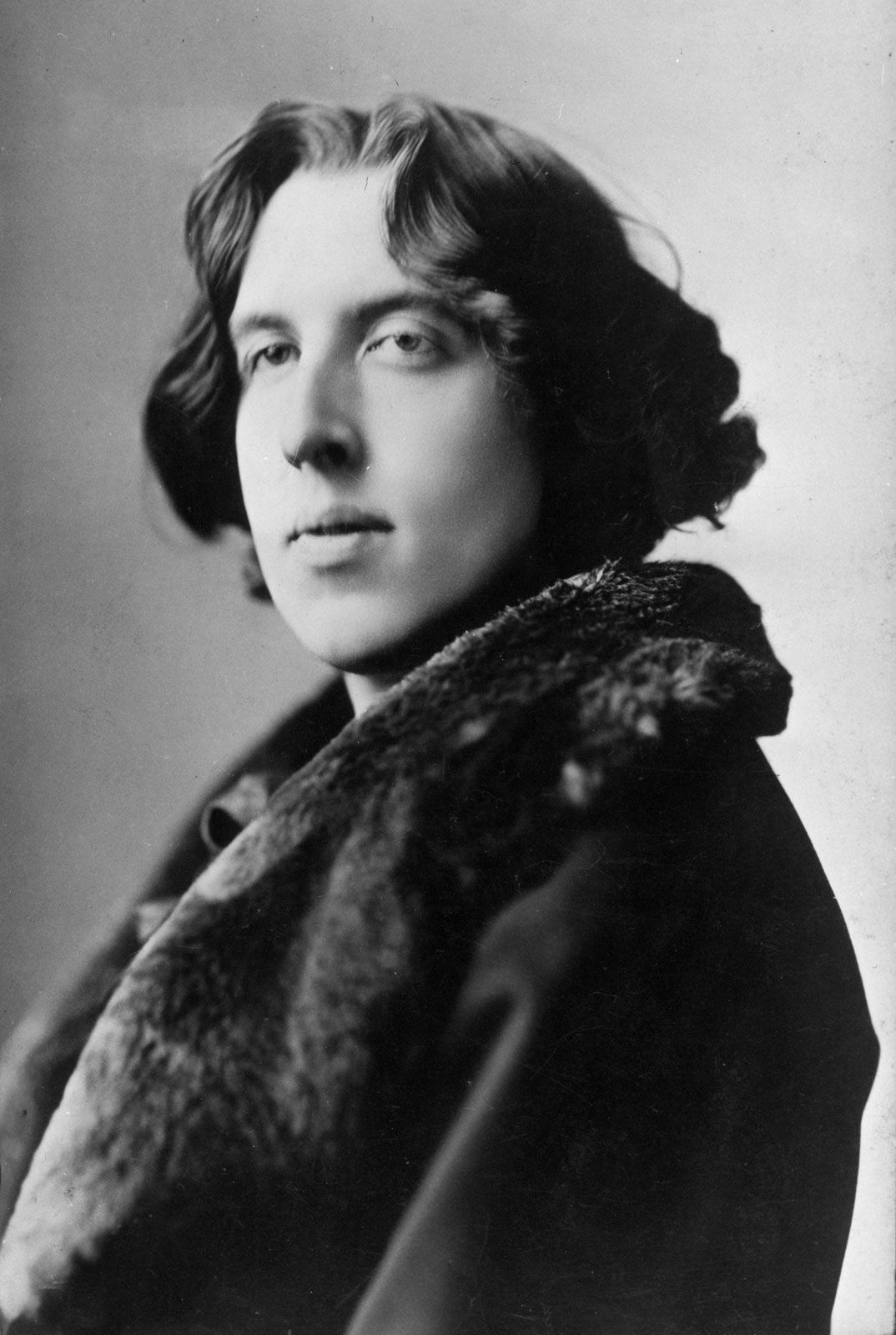
 Oscar Wilde was an Irish writer, poet, playwright and one of the most recognizable literary figures of the Victorian era. Celebrated for his wit, distinctive style and sharp social satire, Wilde produced some of the most enduring works in English literature, including The Picture of Dorian Gray and The Importance of Being Earnest.
Although his literary career lasted only a relatively short time, his work has remained influential more than a century after his death.
Oscar Wilde Age and Birth
Oscar Wilde was born on October 16, 1854, in Dublin, Ireland.
He was the second son of Sir William Wilde, a prominent surgeon, and Jane Francesca Wilde, a poet and writer who published under the name Speranza. His family background exposed him to both medicine and literature from an early age.
Wilde died on November 30, 1900, in Paris, France, at the age of 46. The Academy of American Poets records acute meningitis as the cause of death.
Oscar Wilde Biography Facts
| Detail | Information |
|---|---|
| Full name | Oscar Fingal O’Flahertie Wills Wilde |
| Born | October 16, 1854 |
| Birthplace | Dublin, Ireland |
| Nationality | Irish |
| Profession | Writer, poet and playwright |
| Education | Trinity College Dublin; Magdalen College, Oxford |
| Literary movement | Aestheticism |
| Best-known novel | The Picture of Dorian Gray |
| Best-known play | The Importance of Being Earnest |
| Wife | Constance Lloyd |
| Children | Two sons |
| Died | November 30, 1900 |
| Place of death | Paris, France |
| Age at death | 46 |
Oscar Wilde’s Early Life
Wilde grew up in a culturally active Dublin household. His father was a respected medical specialist, while his mother was involved in literature and Irish nationalist circles.
His mother’s literary interests had an early influence on Wilde’s development. He eventually became known not only for his writing but also for his distinctive personality, fashion and ability to entertain audiences with elaborate conversation.
Wilde’s education was also important to his development as a writer.
He attended Trinity College, Dublin, from 1871 to 1874 before moving to Magdalen College, Oxford, where he studied from 1874 to 1878. At Oxford, he won the Newdigate Prize for his poem Ravenna.
Oscar Wilde and the Aesthetic Movement
While studying at Oxford, Wilde became increasingly interested in the idea of aestheticism, a movement that emphasized beauty and artistic expression.
Wilde argued that art did not necessarily have to serve a moral, political or practical purpose. Instead, he became associated with the idea that art could be valued for its beauty and artistic qualities.
This philosophy became an important part of his public identity and later influenced both his writing and his reputation.
After leaving Oxford, Wilde moved to London and began establishing himself within literary and artistic circles.
Oscar Wilde’s Writing Career
Wilde initially gained attention as a poet and lecturer.
His first major poetry collection, Poems, was published in 1881. He subsequently spent time traveling and giving lectures about art and aestheticism, including an extended lecture tour of the United States and Canada in the early 1880s.
He later became editor of The Lady’s World, a women’s magazine, where he attempted to broaden the publication’s focus beyond fashion and toward literature, culture and women’s opinions.
By the late 1880s, Wilde had entered the most productive period of his literary career.
The Picture of Dorian Gray
Oscar Wilde published The Picture of Dorian Gray in 1890, with a revised book edition following in 1891.
It was his only novel.
The story follows Dorian Gray, a young man whose portrait ages and bears the physical consequences of his increasingly destructive life while he remains outwardly youthful.
The novel explored beauty, morality, desire, corruption and the relationship between art and life.
Although the book attracted controversy among some Victorian critics, it eventually became one of Wilde’s most famous literary works and is now widely regarded as a major work of late Victorian literature.
Oscar Wilde’s Famous Plays
Wilde became particularly successful as a playwright during the 1890s.
His major plays included:
- Lady Windermere’s Fan
- A Woman of No Importance
- An Ideal Husband
- The Importance of Being Earnest
His plays became known for clever dialogue, satire, social observation and elaborate wordplay.
The Importance of Being Earnest
First performed in 1895, The Importance of Being Earnest became Wilde’s most famous comedy.
The play uses mistaken identities, romantic complications and exaggerated social conventions to satirize Victorian attitudes toward marriage, class and respectability.
It remains one of the most frequently performed works in the English-language theatrical tradition.
Oscar Wilde’s Personal Life
Wilde married Constance Lloyd in 1884, and the couple had two sons.
His private life later became the focus of intense public attention because of his relationship with Lord Alfred Douglas, known as “Bosie.”
During the 1890s, Wilde became involved in legal proceedings connected to his relationship with Douglas and accusations surrounding his sexuality.
Oscar Wilde’s Trials and Imprisonment
Wilde’s legal troubles dramatically changed his life and ended his career at the height of his success.
In 1895, he faced criminal proceedings and was ultimately convicted of gross indecency, an offense used at the time to criminalize homosexual relationships between men.
He was sentenced to two years of hard labor and served his sentence in Reading Gaol from 1895 to 1897.
His imprisonment severely affected his finances, health and professional life.
During and after his imprisonment, Wilde produced writing that reflected on suffering, relationships and his experiences in prison.
The Ballad of Reading Gaol
One of Wilde’s most important later works was The Ballad of Reading Gaol.
Published in 1898 under the pseudonym C.3.3., based on his former prison designation, the long poem drew upon his experience of incarceration and the harsh realities of prison life.
The work became one of his best-known poems.
Wilde also wrote De Profundis, a lengthy letter addressed to Lord Alfred Douglas while he was imprisoned. The work was published after Wilde’s death.
Oscar Wilde’s Final Years
Wilde was released from prison in 1897 and left Britain, spending his remaining years largely in France.
His financial circumstances had deteriorated considerably, and he produced relatively little major new work during the final years of his life.
His post-prison years were marked by declining health and financial difficulties.
Wilde died in Paris on November 30, 1900, from acute meningitis. He was 46.
Oscar Wilde’s Legacy
Oscar Wilde’s reputation continued to grow after his death.
His plays remain staples of English-language theater, while The Picture of Dorian Gray continues to be read and studied internationally.
His writing is particularly remembered for its wit, paradoxes, social satire and criticism of Victorian conventions.
Wilde’s influence also extends beyond individual books and plays. His life and writing have made him an enduring figure in discussions about art, identity, sexuality, censorship and freedom of expression.
More than a century after his death, works such as The Importance of Being Earnest, The Picture of Dorian Gray and The Ballad of Reading Gaol remain central to his literary reputation.
Oscar Wilde’s Major Works
| Work | Type | Year |
|---|---|---|
| Poems | Poetry collection | 1881 |
| The Happy Prince and Other Tales | Fairy tales | 1888 |
| The Picture of Dorian Gray | Novel | 1890/1891 |
| Lady Windermere’s Fan | Play | 1892 |
| A Woman of No Importance | Play | 1893 |
| An Ideal Husband | Play | 1895 |
| The Importance of Being Earnest | Play | 1895 |
| De Profundis | Letter/prose | Written 1897 |
| The Ballad of Reading Gaol | Poem | 1898 |
Why Oscar Wilde Remains Famous
Oscar Wilde’s career was relatively brief, but the combination of his literary talent, theatrical success and distinctive philosophy of art gave him an unusually lasting place in cultural history.
He moved between poetry, fiction, drama, criticism and fairy tales, while his sharp observations about society helped make his writing recognizable across generations.
Today, Oscar Wilde is remembered both for the works he created and for the extraordinary circumstances that shaped the final years of his life.
Disclaimer: This biography is based on established biographical and literary sources. Historical descriptions of Wilde’s personal life, relationships and legal proceedings can vary in emphasis among sources. The article focuses on documented biographical information and does not attempt to interpret disputed aspects of his private life.
SEO Focus Keyword: Oscar Wilde biography
Secondary Keywords: Oscar Wilde age, Oscar Wilde biography and career, Oscar Wilde early life, Oscar Wilde career, Oscar Wilde books, Oscar Wilde famous works, Oscar Wilde poems, Oscar Wilde plays, Oscar Wilde The Picture of Dorian Gray, Oscar Wilde The Importance of Being Earnest, Oscar Wilde death, Oscar Wilde family, Oscar Wilde education